
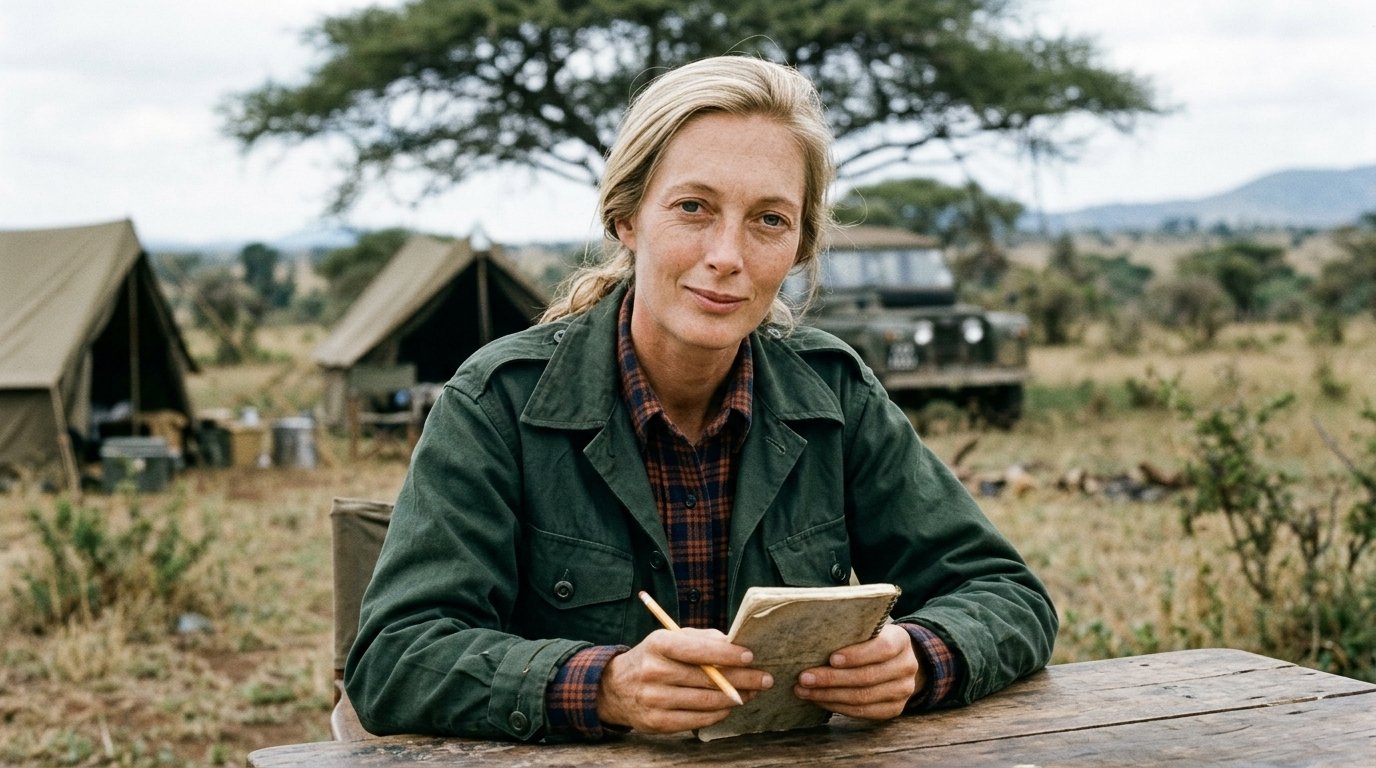
Jane Goodall was an English scientist who spent more than six decades changing the way the world thinks about chimpanzees, and about humans too. She was born in London in 1934 and died on 1 October 2025 at the age of 91. This Jane Goodall biography walks through her childhood, her famous years in Tanzania, the organizations she built, and what her legacy looks like in 2026. Most older pages about her still describe her as if she were alive, so this article is written with her full life story in view.
Jane Goodall Quick Facts
| Detail | Information |
|---|---|
| Full name | Dame Valerie Jane Goodall (born Valerie Jane Morris-Goodall) |
| Born | 3 April 1934, London, England |
| Died | 1 October 2025, California, USA (age 91) |
| Profession | Primatologist, ethologist, anthropologist, conservationist |
| Known for | Long-term study of wild chimpanzees at Gombe, Tanzania |
| Education | PhD in ethology, University of Cambridge (1965) |
| Founded | Jane Goodall Institute (1977), Roots & Shoots (1991) |
| Spouses | Hugo van Lawick (married 1964, divorced 1974); Derek Bryceson (married 1975, he died in 1980) |
| Child | One son, Hugo Eric Louis, known as “Grub” |
| Net worth | No reliable public figure has been confirmed |
Jane Goodall Early Life and Childhood
Jane was born in Hampstead, London, to Mortimer Herbert Morris-Goodall, a businessman who loved motor racing, and Margaret Myfanwe Joseph, who wrote novels under the name Vanne Morris-Goodall. She grew up with her younger sister, Judy, and the family later settled in Bournemouth on the south coast of England. Jane attended Uplands School in nearby Poole. Her mother is often credited with supporting her curiosity about animals from the very start, even when it made the household a little messy.
One small detail from her childhood became famous. Instead of a teddy bear, her father gave her a stuffed chimpanzee toy named Jubilee, and some of her mother’s friends worried it would give her nightmares. It did the opposite. Jane kept Jubilee for the rest of her life, and the toy became a symbol of how early her love of animals began. Long before she had any scientific training, she was already reading about Africa and dreaming of living among wild animals.
How Jane Goodall Reached Africa
Money was tight after school, and a university degree was not possible at that time. Jane worked as a secretary and took other jobs while saving for a trip to Africa. In 1957 a school friend invited her to visit a family farm in Kenya, and she accepted straight away. That trip changed everything, because it led her to Louis Leakey, the well-known paleoanthropologist who was then working at the national museum in Nairobi.
Leakey was impressed by her patience and her genuine interest in animals, and he first gave her a job as his secretary. He had been looking for someone to begin a long study of wild chimpanzees, and he believed a person without formal training might watch them with fresh eyes. In 1958 he sent Jane to London to learn about primate behavior from experts, and he then raised the money for her fieldwork. On 14 July 1960, at the age of 26, she arrived at Gombe Stream on the shore of Lake Tanganyika in Tanzania. Because local authorities did not want a young woman to camp alone in the forest, her mother came along for the first months.
Jane Goodall’s Career at Gombe: Her Biggest Discoveries
Jane did not follow the usual rules of science at the time. Researchers normally gave animals numbers, but she gave the chimpanzees names, such as David Greybeard, and she wrote about their moods and personalities. Some scientists criticized this approach. Over time, however, it showed that each chimpanzee had its own character and its own family bonds, and many researchers came to accept that view.
Her first big finding came in October 1960, when she saw chimpanzees eating meat, even though they had been thought to be mostly plant eaters. A few weeks later, in early November, she watched David Greybeard strip the leaves from a stem and push it into a termite mound to pull out insects. This was both tool use and tool making, something scientists believed only humans could do. When she sent the news to Leakey, he famously replied that science would now have to redefine “tool”, redefine “man”, or accept chimpanzees as humans.
Her work at Gombe continued for decades and grew into one of the longest wild chimpanzee studies in history. Over the years her team recorded not only gentle behavior such as grooming and play, but also harsher events like fights between groups. These records helped people see chimpanzees as complex social animals rather than simple creatures. The research is still carried on today by the Jane Goodall Institute and local field teams.
Education and the Cambridge PhD
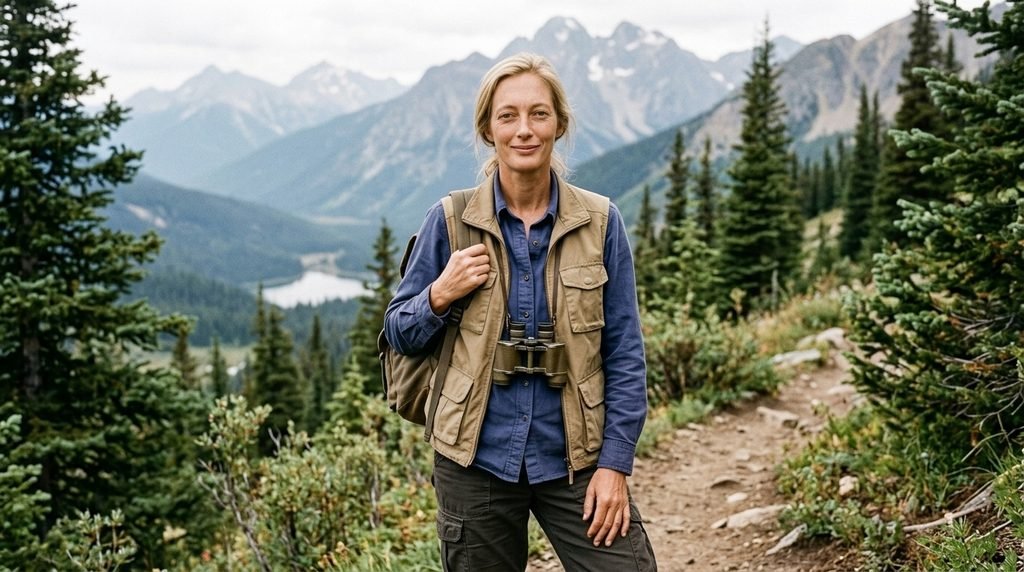
Jane had no university degree when she began, so Leakey arranged for her to study at the University of Cambridge in the early 1960s. She became one of the very few people at that time allowed to start a doctorate without first completing a bachelor’s degree. In 1965 she received her PhD in ethology, with a thesis on the behavior of free-living chimpanzees. During this period she also gained a wider audience, because National Geographic supported her work and sent photographer Hugo van Lawick to record it. The television special “Miss Goodall and the Wild Chimpanzees” was first broadcast in the United States on 22 December 1965 and introduced her to millions of viewers.
The Jane Goodall Institute, Roots & Shoots and Activism
In 1977 Jane founded the Jane Goodall Institute to support the Gombe research and to protect chimpanzees and their forests. The institute grew into a global network that now has offices in about 30 countries, and it works on conservation, community development, and education. In the mid-1980s she began to feel that the research alone was not enough, because chimpanzee numbers were falling and forests were disappearing. From then on she spent much of her time traveling, speaking, and campaigning, and her own institute described her as being on the road for almost 300 days a year.
Her most personal project may have been Roots & Shoots, the youth program that began in 1991 when 16 teenagers met with her on a back porch in Dar es Salaam. It encourages young people to take small, practical steps for people, animals, and the environment in their own communities. She often said it was the part of her work that gave her the most hope. In 2002 she was also named a United Nations Messenger of Peace.
Jane Goodall’s Personal Life
Jane married Dutch wildlife photographer Baron Hugo van Lawick on 28 March 1964, and their son, Hugo Eric Louis, was born in 1967. He was nicknamed “Grub” and spent part of his early childhood at Gombe. The marriage ended in divorce in 1974. In 1975 she married Derek Bryceson, who led Tanzania’s national parks, and they were together until his death in 1980. Beyond these basic facts, she kept most of her private life out of the spotlight, and this article does not guess at details that have not been publicly confirmed.
Jane Goodall’s Awards and Honors
Over her lifetime Jane received many national and international honors. She was made a Commander of the Order of the British Empire in 1995 and was later promoted to Dame Commander, an honor that sources date to around 2003 or 2004. She also received Spain’s Prince of Asturias Award in 2003, France’s Legion of Honour, and Japan’s Kyoto Prize, along with honorary degrees from many universities. Her story also inspired a large body of film work, including the Emmy-winning 2017 documentary “Jane” and the 2023 IMAX film “Jane Goodall: Reasons for Hope”.
Jane Goodall’s Death and Tributes
The Jane Goodall Institute announced that she died of natural causes on Wednesday, 1 October 2025, while she was in California on a speaking tour of the United States. She had been due to speak at UCLA in Los Angeles later that week. Tributes came from scientists, world leaders, and ordinary people, and schools and communities held tree-planting events in her name. Some media outlets later reported a specific medical cause, but the institute’s official statement said only natural causes, so this article keeps to that.
Jane Goodall’s Legacy in 2026: Recent Updates
Her influence did not end with her death. On 23 March 2026 the Jane Goodall Institute announced the first Jane Goodall Day, held on 3 April, which would have been her 92nd birthday. Supporters around the world were invited to mark the day with local action, and the Institute’s US branch used it as its first annual giving day. Governments have also recognized her, and a resolution in the Illinois Senate proposed marking the day in the state in her honor.
Perhaps the most lasting part of her legacy is the message she repeated in almost every talk. She believed that every person makes a difference every day, and that individuals choose what kind of difference they want to make. For many readers, that simple idea matters as much as her scientific discoveries.
How This Was Researched
I researched this biography using the Jane Goodall Institute’s own biographies and press releases, major news coverage of her death, and reference pages on her early life and career. I compared dates across more than one source, and where sources disagreed, such as the exact year of her damehood, I said so openly. Many top-ranking pages are still written as if she is alive and say little about her death or 2026 events, so I tried to fill that gap with an up-to-date, plain-language account.
Accuracy Note
This biography is based on publicly available information, including the Jane Goodall Institute’s official materials and verified news coverage. If you notice anything outdated or incorrect, please let us know so we can update it.
Written and researched by Usama Khan, contributor at lopin magazine.
Frequently Asked Questions
Who was Jane Goodall?
Jane Goodall was an English primatologist and conservationist best known for her long study of wild chimpanzees in Gombe, Tanzania. She also founded the Jane Goodall Institute and the youth program Roots & Shoots.
How old was Jane Goodall when she died?
She was 91 years old. She was born on 3 April 1934 and died on 1 October 2025.
What did Jane Goodall discover about chimpanzees?
She showed that chimpanzees make and use tools, eat meat, and have distinct personalities and strong family bonds. Her tool-use finding in 1960 changed how scientists defined what makes humans unique.
Did Jane Goodall have children?
Yes, she had one son, Hugo Eric Louis, known as “Grub”, born in 1967.
What is Jane Goodall Day?
It is a global day held on 3 April, her birthday, to honor her work. The first official Jane Goodall Day took place in 2026.

Usama Khan is the founder and editor-in-chief of Lopin Magazine, where he oversees the site’s biography and news coverage with a focus on accuracy and well-researched storytelling.