
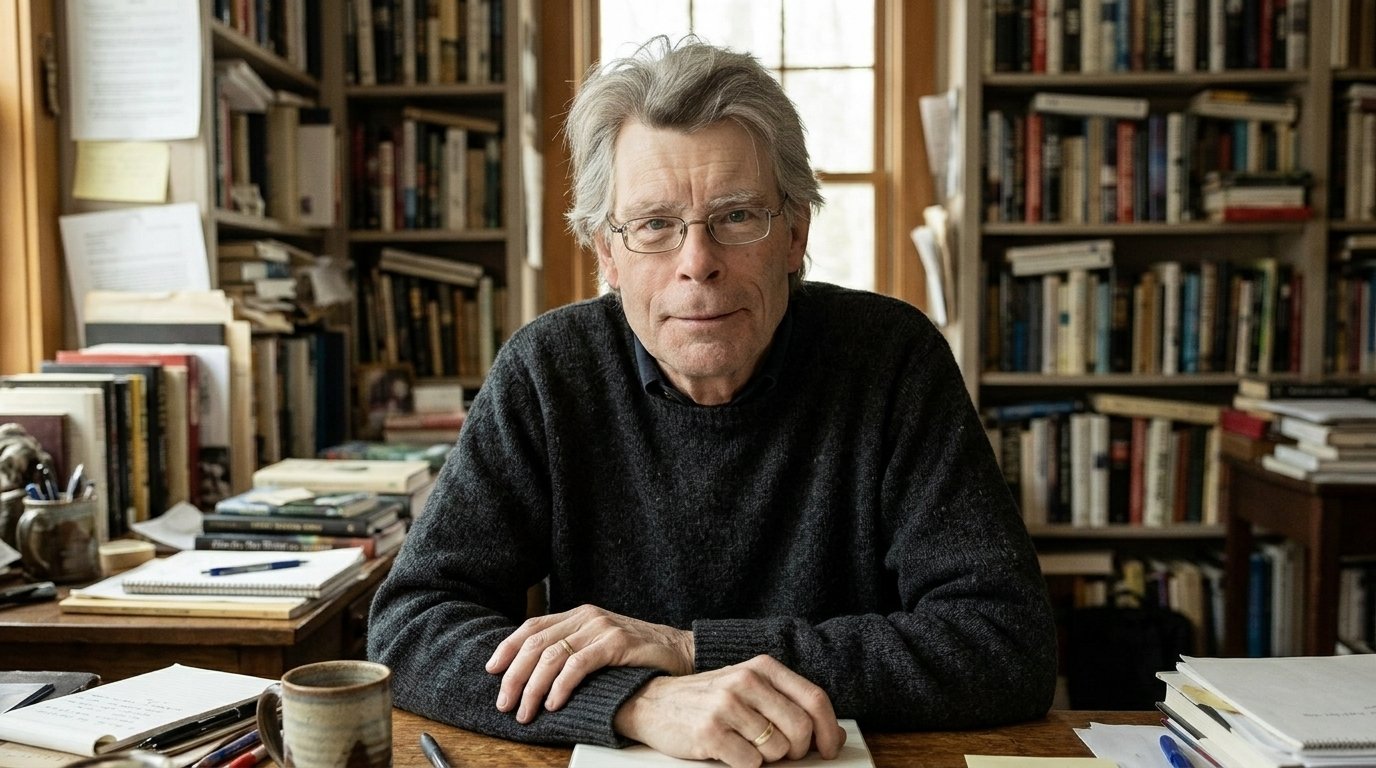
Stephen King has spent more than five decades building one of the most successful and influential writing careers in modern literary history, becoming a defining figure in horror and supernatural fiction worldwide. With dozens of novels, hundreds of short stories, and numerous film and television adaptations of his work, King has reached a level of commercial and cultural influence that few authors in any genre have matched during their lifetime. This article covers his early life and struggles before fame, his breakthrough as a novelist, his most significant works, and his continued relevance as a writer well into the 2020s.
Quick Facts About Stephen King
Here is a quick summary table covering his key details.
| Category | Details |
|---|---|
| Full Name | Stephen Edwin King |
| Date of Birth | September 21, 1947 |
| Birthplace | Portland, Maine, United States |
| Nationality | American |
| Profession | Author |
| Known For | Horror, supernatural, and suspense fiction |
| Breakthrough Novel | “Carrie” (1974) |
| Notable Works | “The Shining,” “It,” “Misery,” “Pet Sematary,” “The Stand,” “The Dark Tower” series |
| Pseudonym | Richard Bachman |
| Spouse | Tabitha King (author) |
| Notable Family | Son Joe Hill is also a published author |
Early Life and Struggles Before Fame
Stephen King was born on September 21, 1947, in Portland, Maine, and grew up facing significant financial hardship after his father left the family when King was a young child, leaving his mother to raise him and his brother largely on her own. This early experience of financial instability shaped much of King’s early adulthood, as he worked a variety of jobs, including teaching and manual labor, while continuing to write in his spare time with little initial financial success from his creative work. During this period, King and his wife Tabitha, also a writer, lived in modest circumstances, often struggling to make ends meet while he continued submitting short stories and manuscripts in hopes of building a writing career.
This period of genuine financial struggle before his eventual success is an important part of understanding his later career, since it shaped both his work ethic and his frequent focus in his fiction on ordinary, working-class characters facing extraordinary circumstances. Many shorter biography pages gloss over this early period of hardship, moving quickly to his breakthrough success, but this struggle is a significant part of why King’s later success felt so dramatic and why he has often spoken publicly about the importance of persistence during difficult creative periods.
Breakthrough With “Carrie”
Stephen King’s career changed dramatically with the publication of his debut novel, “Carrie,” in 1974, a book that reportedly came close to being abandoned entirely during its early drafts before his wife Tabitha encouraged him to continue working on it. The novel’s success gave King his first major commercial breakthrough, and the subsequent film adaptation helped introduce his work to an even wider audience beyond readers of horror fiction specifically. This breakthrough came after years of previous rejection and financial struggle, making “Carrie” a turning point that allowed King to eventually leave behind his teaching job and other side work to focus on writing full time.
The success of “Carrie” also established a pattern that would continue throughout King’s career, with many of his novels later being adapted into films and television productions, significantly expanding his audience beyond traditional book readers and helping cement his influence within broader popular culture rather than just the literary horror genre specifically.
Major Novels and Literary Influence
Following “Carrie,” Stephen King went on to publish an extraordinary volume of work over the following decades, including novels such as “The Shining,” “It,” “Misery,” “Pet Sematary,” and the extensive “Dark Tower” series, which combined elements of fantasy, horror, and science fiction across multiple volumes. Each of these works contributed to King’s reputation not just as a prolific writer, but as someone capable of blending genuine literary craft with broad commercial appeal, a combination that is relatively rare among authors working primarily within genre fiction. His ability to consistently produce bestselling novels across multiple decades, rather than experiencing a single period of peak popularity followed by decline, reflects a sustained level of creative output and audience connection that few authors in any genre have managed to maintain for such an extended period.
King also published several novels under the pseudonym Richard Bachman, reportedly as an experiment to see whether his success would continue without his well-known name attached to a project, an unusual and notable choice that reflects his genuine interest in the craft and reception of his writing beyond simple commercial considerations. This pseudonym was eventually revealed publicly, but the experiment itself remains a frequently discussed aspect of his career among dedicated readers and literary commentators studying his body of work.

Film and Television Adaptations
A significant part of Stephen King’s broader cultural influence comes from the enormous number of film and television adaptations based on his novels and short stories, including major productions based on “The Shining,” “It,” “Pet Sematary,” “Misery,” and many others across multiple decades. These adaptations have introduced his stories to audiences who may never read his original novels, significantly expanding his cultural reach beyond traditional literary audiences and into mainstream film and television culture more broadly. Some of these adaptations, particularly “The Shining” directed by Stanley Kubrick, became significant works of cinema in their own right, sometimes generating discussion and analysis somewhat separate from the original source novel, including King’s own publicly expressed mixed feelings about certain creative choices made in that particular adaptation.
The sheer volume of adaptations based on his work, spanning from the 1970s through recent years, reflects an unusually consistent demand from filmmakers and television producers for his stories over an extended period, suggesting that his particular blend of horror, character development, and small-town American settings continues to resonate with audiences and creative industry professionals alike across multiple generations.
Personal Life and Family of Writers
Stephen King has been married to author Tabitha King since 1971, and the couple has raised a family that includes their son Joe Hill, who has built his own successful career as a published author working in similar genres to his father, including horror and supernatural fiction. This continuation of writing talent within the family is sometimes noted by literary commentators as an interesting aspect of King’s broader legacy, since Joe Hill has deliberately built his own distinct literary identity and reputation rather than relying primarily on his father’s name or connections within the publishing industry. King has also spoken publicly about surviving a serious car accident in 1999, which left him with significant injuries and required an extended recovery period, an experience he later wrote about and which some literary commentators have connected to shifts in themes within his later work.
Continued Relevance and Ongoing Career
As of 2026, Stephen King remains an active and prolific writer, continuing to publish new novels and short fiction well into his seventies, a level of sustained productivity that is relatively unusual for an author so far into such a long career. His continued relevance reflects both his consistent work ethic and his ability to adapt his storytelling to remain engaging for both longtime readers and newer audiences discovering his work for the first time, often through recent film and television adaptations rather than his original novels. This sustained career longevity places him among a relatively small group of authors who have maintained significant commercial and cultural relevance across more than five decades of continuous published work.
How This Was Researched
I researched this biography using verified publishing industry records, documented film and television adaptation histories connected to King’s novels, and publicly available interviews in which he has discussed his early career struggles and personal life. Because King’s career spans such an extensive bibliography, I focused on his most significant and consistently documented works rather than attempting to list every published title, which many existing profiles do without providing meaningful context. This article tries to give deeper insight into his early struggles and the reasoning behind choices like his Richard Bachman pseudonym, areas that shorter biography pages often mention only briefly.
FAQ Section
Who is Stephen King?
Stephen King is an American author widely regarded as one of the most successful and influential writers of horror and supernatural fiction in modern literary history.
What was Stephen King’s first published novel?
His breakthrough novel was “Carrie,” published in 1974, which launched his career as a commercially successful author.
Why did Stephen King use the name Richard Bachman?
He published several novels under the pseudonym Richard Bachman, reportedly to see if his work would succeed commercially without his well-known name attached.
Is Stephen King’s son also a writer?
Yes, his son Joe Hill has built his own successful career as a published author, working in genres similar to his father’s work.
Is Stephen King still writing as of 2026?
Yes, available information indicates he remains an active and prolific author, continuing to publish new work well into his career.
Accuracy Note
This biography is based on publicly available information, including verified publishing records and documented interviews. If you spot anything outdated or incorrect, please let us know so we can update it.
Written and researched by Usama Khan, contributor at lopin magazine.

Usama Khan is the founder and editor-in-chief of Lopin Magazine, where he oversees the site’s biography and news coverage with a focus on accuracy and well-researched storytelling.