
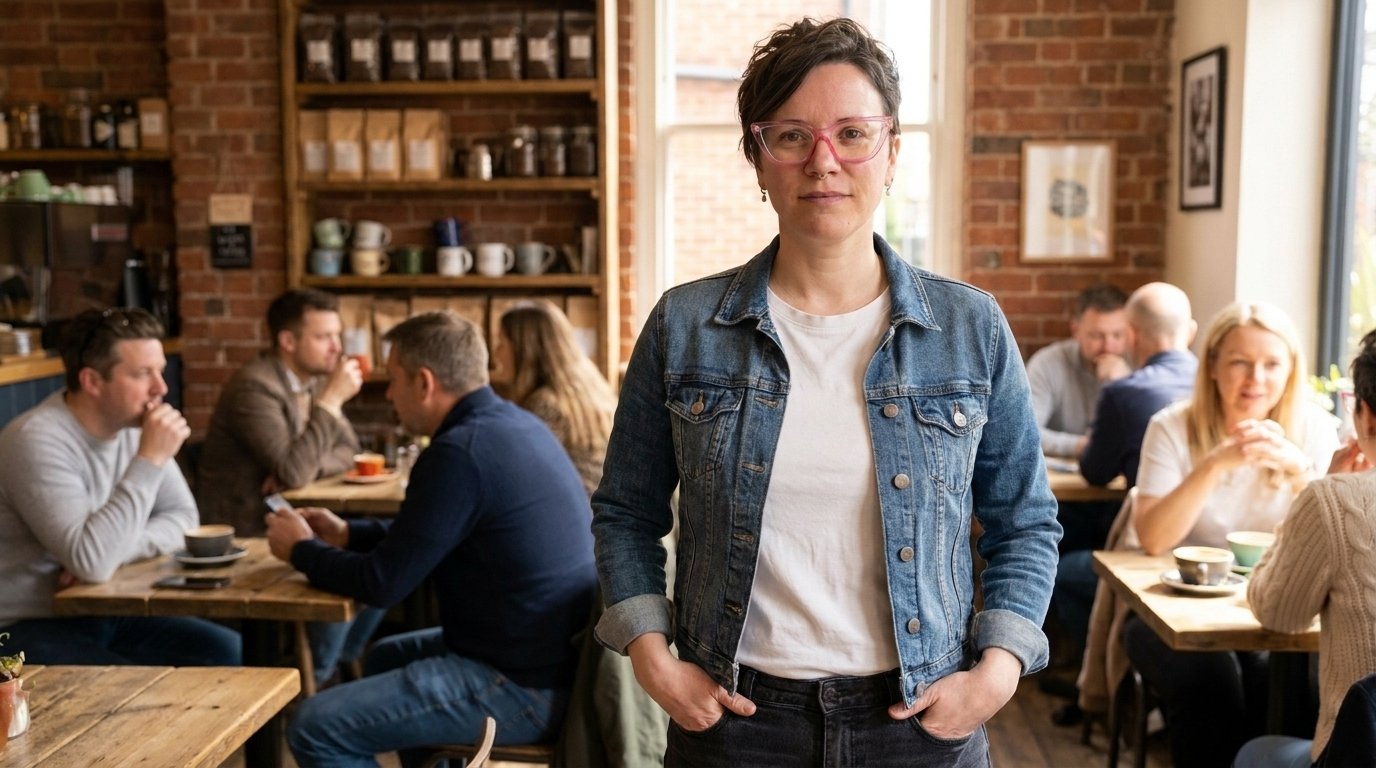
Anne Shaw is an American poet and visual artist who also publishes as Alix Anne Shaw. Many readers who search “Anne Shaw poet MFA” want to know what she studied and how that training shaped her writing. The short answer is that she earned two MFA degrees, one in poetry and one in sculpture, and both art forms show up in her work. This article covers her education, her three poetry collections, her awards, and a few details that shorter author bios leave out or state differently.
Anne Shaw at a Glance
Before the longer story, here is a quick summary of what public sources agree on. Some details, such as her birth date, are not published anywhere reliable, so I have marked them as unconfirmed instead of guessing. The table uses both “Alix Anne Shaw” and “Anne Shaw” because both names appear on her books and bios.
| Fact | Detail |
|---|---|
| Full name | Alix Anne Shaw (also published as Anne Shaw) |
| Profession | Poet, visual artist, sculptor |
| Education | MFA in poetry, George Mason University; MFA in sculpture, School of the Art Institute of Chicago |
| Best-known books | Undertow, Dido in Winter, Rough Ground |
| Main award | Lexi Rudnitsky Poetry Prize (for Undertow) |
| Raised in | Michigan (self-reported in a writers’ directory) |
| Based in | Milwaukee in recent bios; earlier bios say Chicago |
| Date of birth | Not publicly confirmed |
Which Anne Shaw Is This?
Many people share this name, so it helps to say which one this article covers. It is about the poet and sculptor whose first book, Undertow, won the Lexi Rudnitsky Poetry Prize from Persea Books. Her earlier publications use “Anne Shaw,” while her newer bios use “Alix Anne Shaw.” The book titles, publishers, and degrees match across both versions, so I treat them as the same person. If you were looking for a different Anne Shaw, such as someone in another field, this is not that profile.
Early Life and Background
Public information about her childhood is very limited. One writers’ directory entry, which the poet supplied herself, says she was raised in Michigan. I could not find a confirmed birth date, family details, or school history before graduate study, so I leave those out instead of filling the gap with guesses. What the record does show is that she trained in both writing and sculpture and published her first book in 2007. That mix of word and image is the thread that runs through the rest of her career.
Education: The Two MFAs Behind the Keyword
According to her poets.org biography, she received an MFA in poetry from George Mason University and an MFA in sculpture from the School of the Art Institute of Chicago. A few bios call the first degree an MFA in writing, but they are describing the same program. None of the sources I found give graduation years for either degree. Some bios do help with timing: a Kenyon Review note from fall 2012 describes her as a student of visual arts at the Art Institute school, and a bio from around 2012 calls her a graduate student of writing and sculpture. By 2014, her bios list both degrees as finished.
The two degrees matter because her books pay close attention to objects and images. A review of Rough Ground in Publishers Weekly points out how concrete her language becomes, with nests, birds, houses, and roofs piling up into small stories. A study guide from her publisher also draws attention to the diagrams near the end of that book. I did not find her linking this directly to her sculpture training, so that connection is my reading and not her statement. A Community of Writers page also lists her with a 2010 tag, which points to a workshop visit that year, although the page does not say so outright.
Career and Books
Her first collection, Undertow, won the Lexi Rudnitsky Poetry Prize and was published by Persea Books. Most bios date the book to 2007, though one directory lists 2008, so I use 2007 as the more common date. The prize gave her an early place among respected small-press poets in the United States. For many readers, this is still the book that put her name on the map.
Dido in Winter (2014)
Her second collection, Dido in Winter, came out from Persea Books in 2014, after a few earlier bios announced it as forthcoming in 2013. Publishers Weekly praised its sharp eye and fine ear, and noted the mix of personas, verse letters, and poems about faith and love. One poem imagines Queen Dido writing to Hans Christian Andersen’s little match girl. The same review found some poems overwrought and wondered what stance she had yet to claim as her own. One of her own bios says Library Journal named the book among the five best poetry collections of 2014, though I could not check that claim independently.
Rough Ground (2018)
Rough Ground, published by Etruscan Press in July 2018, is her most unusual project. It turns Ludwig Wittgenstein’s philosophy text, the Tractatus Logico-Philosophicus, into poetry. Wittgenstein argued that language limits what we can say, and the publisher’s description quotes her saying that as a poet she does not share that view. Her publisher’s study guide adds that the book weaves in the story of a woman who witnesses nuclear war, while the catalog copy describes it as a book about trauma and the limits of speech. Reviewers split on it: Publishers Weekly found it admirable but hard to enter, while the poet Bin Ramke called it unlike anything he had read. A section of the project first appeared as a chapbook titled Contingent from Damask Press, and she celebrated the book’s release at Woodland Pattern Book Center in Milwaukee.
Other Work: Journals, Online Projects, and Teaching
Beyond her books, her poems and reviews have appeared in Harvard Review, New American Writing, Denver Quarterly, Kenyon Review, Crab Orchard Review, Fence, and The Los Angeles Review, among others. She has also been featured on Poetry Daily and From the Fishouse, two well-known sites for sharing new poems. A Poets & Writers directory entry says she founded the Twitter Poetry Project, an online poem built on the platform, and her bios mention an interactive dream archive where visitors can add their own dreams. These projects show how she treats the internet as another place to make art.
On teaching, a 2017 bio from From the Fishouse lists her as an assistant professor of English at Franklin Pierce University. I could not confirm whether she holds that job today, so I would not treat it as current. Her later bios mention writing, art, and criticism, but not a teaching post.
Awards and Honors
Her best-confirmed honor is the Lexi Rudnitsky Poetry Prize, which appears in nearly every bio. A Poets & Writers directory entry, filled in by the poet herself, lists several others: the Gertrude Stein Award for Innovative Poetry from Green Integer Press, a win in the Literal Latte Food Verse Contest, finalist status for the Colorado Poetry Prize and the DIAGRAM hybrid essay contest, and semifinalist status for the Discovery/The Nation award. Because that list is self-reported and dates from 2017, I treat the extra items as credible but less firmly verified than the Rudnitsky win.
Style and Critical Reception
Readers describe her style as bold, playful, and experimental. The poet Kazim Ali once wrote that she is “very badly behaved,” meaning her poems ignore the usual manners of language. Critics have praised her imagery and range while sometimes finding her work too dense or ornate. That mix of praise and doubt is common for poets who take risks, and it helps explain why her three books feel so different from one another.
Name Changes and Book Count: Clearing Up the Confusion
Two things confuse readers when they compare her bios. First, older pages say she wrote two collections, while newer ones say three, because Rough Ground arrived in 2018. Second, a Poets & Writers directory entry lists a title called Shatter & Thrust (Persea, 2013) alongside Dido in Winter (2014), and a 2012 Kenyon Review bio calls it a forthcoming collection. Later bios list only three books and never mention it. I could not confirm whether it was retitled, replaced, or never published, so I treat that title as unconfirmed.
Where She Is Today
Her most recent bios say she lives in Milwaukee, while older ones place her in Chicago, and one lists both cities. I searched for 2026 news about her and found no verified new book, award, or public statement. For that reason this article has no “Recent News” section, because adding one would mean padding it with guesses. If a new project appears, her publishers and her own website are the best places to check.
How This Was Researched
I wrote this profile using publisher pages, poetry organization bios, literary journal contributor notes, trade reviews, and event listings, and I compared names, titles, and dates across them. Most of the available material is short author bios, so I put extra effort into explaining the two MFAs, the name differences, and the unclear book list, since those are the things readers search for. Where sources disagreed or went quiet, I said so directly. I have no personal contact with the poet, and nothing here comes from private information.
Accuracy Note
This biography is based on publicly available information, including publisher pages, journal bios, and published reviews. Some details, such as her date of birth and current teaching status, are unconfirmed. If you spot anything outdated or incorrect, please let us know so we can update it.
Written and researched by Usama Khan, contributor at lopin magazine.
FAQ
Who is Anne Shaw the poet?
Anne Shaw, also published as Alix Anne Shaw, is an American poet and visual artist. She wrote Undertow, Dido in Winter, and Rough Ground, and she won the Lexi Rudnitsky Poetry Prize.
What MFA degrees does Anne Shaw have?
She has an MFA in poetry from George Mason University and an MFA in sculpture from the School of the Art Institute of Chicago.
What is Rough Ground about?
It is a poetic translation of Wittgenstein’s Tractatus Logico-Philosophicus, published by Etruscan Press in 2018. It also weaves in the story of a woman who witnesses nuclear war.
Are Anne Shaw and Alix Anne Shaw the same person?
The books, publishers, and degrees match across both names, so they appear to be the same poet. Her older work uses “Anne Shaw” and her newer bios use “Alix Anne Shaw.”
Where does Anne Shaw live?
Recent bios say Milwaukee, while earlier ones say Chicago.

Usama Khan is the founder and editor-in-chief of Lopin Magazine, where he oversees the site’s biography and news coverage with a focus on accuracy and well-researched storytelling.