
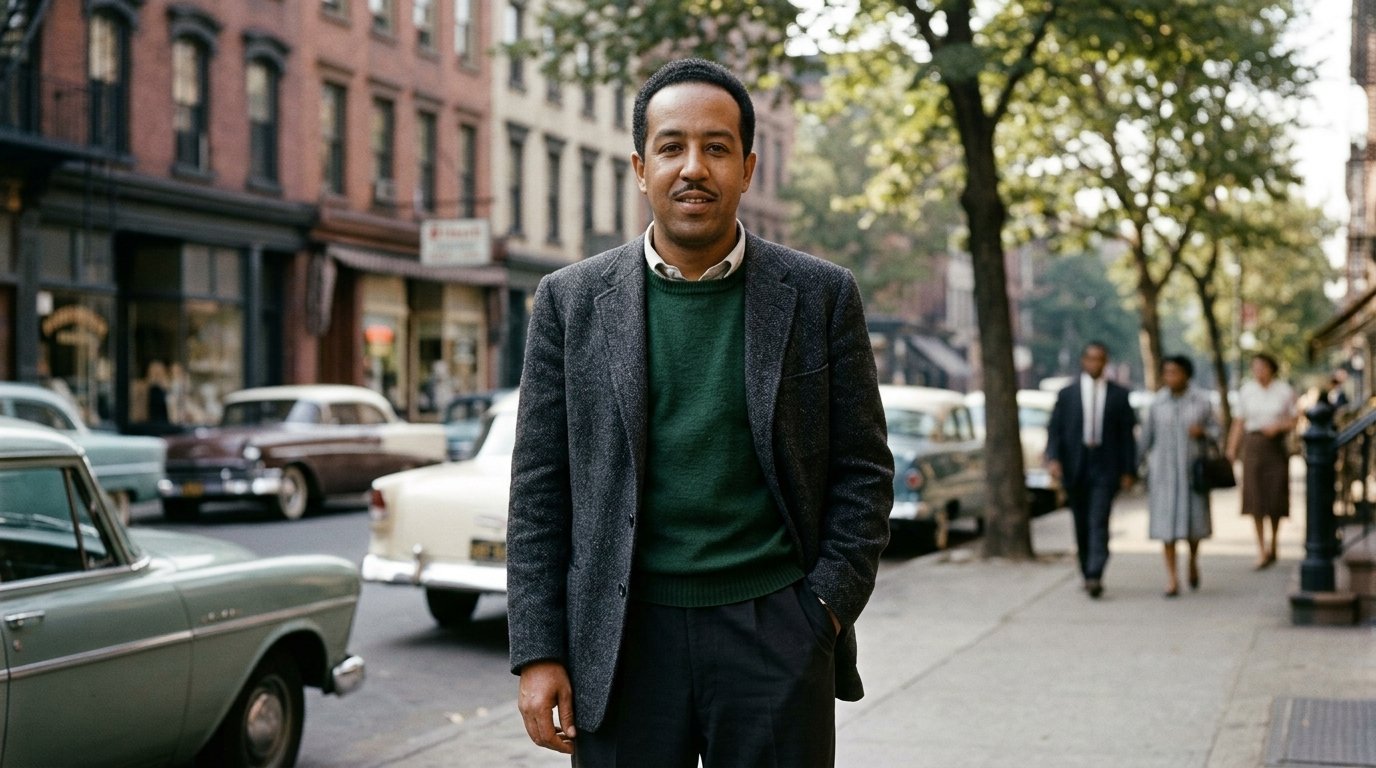
Langston Hughes was an American poet, playwright, novelist and newspaper columnist who became one of the strongest voices of the Harlem Renaissance. He wrote about everyday Black life in the United States, and he did it in plain language that borrowed its rhythm from jazz and blues. This Langston Hughes biography follows his life from a small town in Missouri to the streets of Harlem, and it explains why his poems, such as “Harlem” and “The Negro Speaks of Rivers,” are still read in schools around the world. Where sources disagree on a detail, this article says so instead of guessing.
Langston Hughes Quick Facts
| Detail | Information |
|---|---|
| Full name | James Mercer Langston Hughes |
| Born | 1 February 1902, Joplin, Missouri (a few sources give 1901) |
| Died | 22 May 1967, New York City, aged 65, from complications of prostate cancer |
| Profession | Poet, playwright, novelist, short story writer, columnist |
| Parents | Caroline (Carrie) Mercer Langston and James Nathaniel Hughes |
| Education | Columbia University (about one year); Lincoln University, Pennsylvania (B.A.) |
| First book of poems | The Weary Blues (1926) |
| First novel | Not Without Laughter (1930) |
| Best-known poems | “The Negro Speaks of Rivers,” “Dreams,” “I, Too,” “Harlem” |
| Famous character | Jesse B. Semple, known as “Simple” |
Langston Hughes Early Life and Family
Langston was born in Joplin, Missouri, the second child of Carrie Langston, a schoolteacher, and James Hughes. Both of his parents came from mixed backgrounds, and he was of African American, European American and Native American descent. His grandfather Charles Henry Langston was an educator and an activist who worked for the voting rights of Black Americans in Kansas. That family history mattered, because it gave Langston a sense that his people had a long record of struggle and pride.
His parents separated soon after he was born, and his father left for Cuba and then Mexico, hoping to escape the racism of the United States. His mother had to travel to look for work, so Langston was raised mostly by his grandmother, Mary Patterson Langston, in Lawrence, Kansas. She told him stories from the Black oral tradition and from her own activist generation, and she gave him a lasting sense of racial pride. After she died, he lived for a time with family friends, and then he moved with his mother and her new husband, first to Illinois and later to Cleveland, Ohio. He loved books from an early age, and he began writing poems while still in school.
From Mexico and Columbia to the Sea
After finishing high school in 1920, Langston visited his father in Mexico. His father wanted him to become an engineer, but Langston wanted to be a writer, and he hoped to persuade his father to help him pay for Columbia University in New York. He enrolled at Columbia in 1921, but he stayed only about a year. What he found in New York mattered more than the classroom, because he discovered Harlem and its fast-growing cultural life.
In July 1921 the magazine The Crisis, which was edited by W. E. B. Du Bois, published his poem “The Negro Speaks of Rivers.” This was his first big step as a writer. Soon afterward he worked a series of jobs, including sailor on ships that travelled to Africa and Europe in 1923 and 1924. Later he lived in Washington, D.C., where he worked as a hotel busboy while he kept writing. In April 1925 his poem “The Weary Blues” won first prize in a contest run by Opportunity magazine, and that win led the publisher Alfred A. Knopf to release his first book of poems in January 1926.
Langston Hughes Career: The Harlem Renaissance and Beyond
The Weary Blues made Langston a leading figure of the Harlem Renaissance, the burst of Black art, music and writing that grew in New York in the 1920s. He also wrote a famous essay in 1926, “The Negro Artist and the Racial Mountain,” in which he defended honest pictures of Black life and the use of jazz and everyday speech in poetry. Some critics at the time disliked his focus on ordinary working people, but that choice is the very reason many readers loved him. A wealthy supporter of the arts, Amy Spingarn, helped pay for his studies at Lincoln University in Pennsylvania, where he finished his degree around 1929. Thurgood Marshall, who later became a Supreme Court justice, was one of his classmates there.
His first novel, Not Without Laughter, appeared in 1930 and won the Harmon Gold Medal for literature. In the early 1930s he travelled to Cuba and Haiti, and he also visited the Soviet Union, and later he reported from Spain during its civil war. By 1940 he had helped start Black theater groups in Harlem, Chicago and Los Angeles. He wrote plays, opera texts, song lyrics, children’s books and short stories, and he edited collections of poems by other Black writers. Many readers know him mainly for his poems, but his range was much wider than that.
Jesse B. Semple and the Chicago Defender
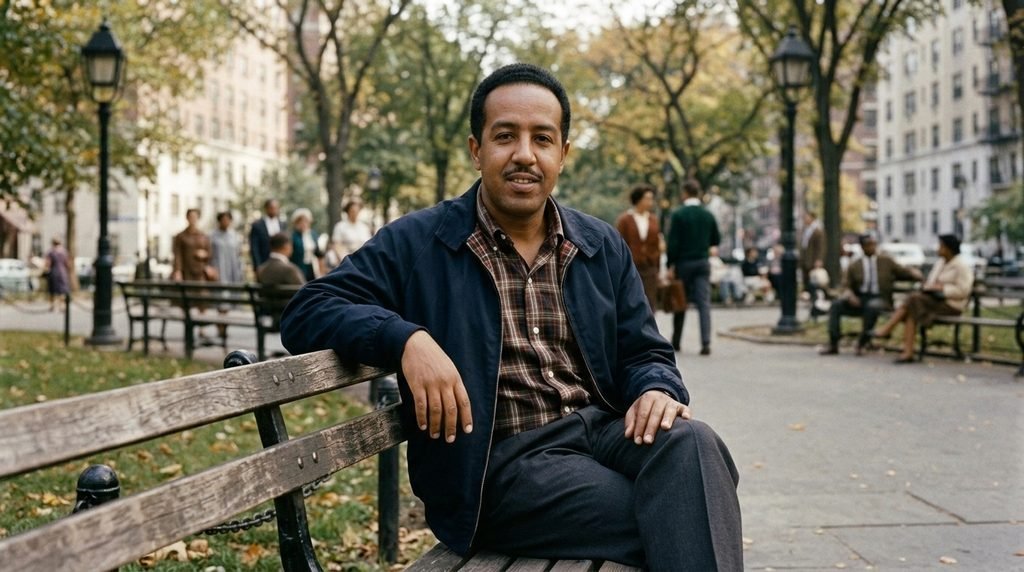
One of his most loved creations was a character named Jesse B. Semple, usually called “Simple.” Langston first brought him to life in the early 1940s in his newspaper column for the Chicago Defender, a leading Black newspaper. Simple was a working-class Black man in Harlem who talked about race, money, love and daily life with humor and sharp common sense. Through him, Langston could say difficult things about racism in a way that made readers smile first and think afterward. The character later appeared in several books and in a stage play, and the column also ran in the New York Post.
“Harlem” and Montage of a Dream Deferred
In 1951 Langston published Montage of a Dream Deferred, a long sequence of poems that reads like a day in the life of Harlem. The collection uses the broken rhythms of jazz and bebop, and it includes his best-known poem, “Harlem,” which opens by asking what happens to a dream that is put off. The poem looks at how the American Dream can fall short for Black Americans, and its final lines ask whether such a dream might explode. Critics at the time gave the book a mixed reception, yet it is now seen as one of the most important poetry collections of the century.
Some of his other famous poems, such as “Dreams” and “I, Too,” are short, clear and easy to remember, which is why they are often taught to young readers. In his second autobiography, I Wonder as I Wander (1956), he also wrote about his travels and his working life. Many scholars describe him as one of the founders of jazz poetry, a style that follows the improvised rhythm of jazz music.
The 1953 Senate Hearing
Langston’s career was not free from political trouble. After his trip to the Soviet Union in the 1930s, he was often attacked for supposed communist sympathies. In 1953 he was called to testify before the Senate subcommittee led by Joseph McCarthy, which was investigating alleged subversion. He was not formally punished after the hearing, but the episode shaped how he was treated by the press and by some publishers for years. This part of his life is often left out of short biographies, yet it shows how much pressure Black writers faced in those years.
Personal Life
Langston Hughes is not known to have married, and he kept much of his private life out of public view. Some scholars and writers have discussed his sexuality, and they point to hints in his poems and his close friendships, but his main biographer, Arnold Rampersad, did not describe him as homosexual. Because Langston never spoke about it plainly in public, this article does not claim anything that cannot be confirmed. What is clear is that he put his writing, his travels and his friendships with other artists at the center of his life.
Awards, Teaching and Honors
Over his lifetime Langston received many honors and fellowships, and he also taught at Atlanta University and the University of Chicago. In 1963 Howard University gave him an honorary doctorate. Later, after his death, the first Langston Hughes Medal was given to the City College of New York in 1973, and in 2012 he was inducted into the Chicago Literary Hall of Fame. The United States Postal Service issued a stamp in his honor in January 2002, marking the hundredth anniversary of his birth.
Death and Legacy
Langston Hughes died in New York on 22 May 1967 at the age of 65, from complications related to prostate cancer. After his death the city of New York named his home on East 127th Street in Harlem a cultural landmark and renamed the street “Langston Hughes Place.” He left his personal library to Lincoln University, which keeps his memory alive among new students. Today his poems are read in classrooms, performed on stages and translated into many languages, and several schools and cultural centers in the United States carry his name. Experts often say he helped change the sound of American literature by showing that poems could be about everyday people and still be great art.
How This Was Researched
I wrote this biography using literary archives, university and library biographies, educational reports on his life, and published summaries of his major works. I compared the main dates, such as his poems, books and death, across more than one source. A few sources give 1901 as his birth year, but most give 1902, so I used 1902 and noted the difference. My search for recent news found nothing about Hughes himself worth adding, so I did not add a news section, and I focused instead on filling gaps in existing pages, such as his 1953 hearing and the creation of Simple.
Accuracy Note
This biography is based on publicly available information, including library and university biographies and educational sources. Some details, such as his birth year and the exact timing of a few early events, vary between sources, and we have tried to note this clearly. If you spot anything outdated or incorrect, please let us know so we can update it.
Written and researched by Usama Khan, contributor at lopin magazine.
Frequently Asked Questions
Who was Langston Hughes?
Langston Hughes was an American poet, playwright, novelist and columnist, and a leading figure of the Harlem Renaissance. He is known for poems about Black life written in the rhythm of jazz and blues.
When and where was Langston Hughes born?
Most sources say he was born on 1 February 1902 in Joplin, Missouri. A few sources give 1901 instead.
What is Langston Hughes best known for?
He is best known for poems such as “The Negro Speaks of Rivers,” “Dreams,” “I, Too” and “Harlem,” as well as his collection The Weary Blues and his character Jesse B. Semple.
How did Langston Hughes die?
He died in New York City on 22 May 1967 at age 65, from complications of prostate cancer.
What is the Harlem Renaissance?
It was a period of great creativity among Black artists, writers and musicians in Harlem, New York, mainly in the 1920s and early 1930s. Langston Hughes was one of its central writers.

Usama Khan is the founder and editor-in-chief of Lopin Magazine, where he oversees the site’s biography and news coverage with a focus on accuracy and well-researched storytelling.